-01.jpg)
-02.jpg)
-03.jpg)

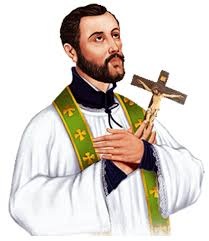
The Patron of the school is Saint Francis Xavier (7th April 1506 – 3rd December 1552). Born into a noble Spanish family, Francis became a follower of Saint Ignatius of Loyola during his studies at the University of Paris and was one of his first companions.
The words of Christ, "What profit would there be for one to gain the whole world and forfeit his life?" (Matthew 16:26), were repeatedly placed before the young Francis, who was then a teacher of philosophy with a highly promising academic career and a future of prestige and honour before him. Francis Xavier, 24 at the time of living and teaching in Paris, did not heed these words. They were spoken by his close friend Ignatius, whose tireless persuasion eventually won the young man of Christ. Francis then made spiritual exercises under the direction of Saint Ignatius, and in 1534, he joined the little community that later came to be known as the Society of Jesus. Together at Montmartre they took vows of poverty, chastity, and obedience, placing themselves at the apostolic service of the Pope.
From Venice, where he was ordained a priest in 1537, Francis Xavier went to Lisbon, and from there sailed to the East Indies, landing at Goa on the west coast of India. For the next ten years he laboured to bring the faith to widely scattered people such as Hindus, Malays, and Japanese. He spent much of this time in India and served as Provincial of the newly established Jesuit Province of India.
Wherever he went, he lived among the poorest people, sharing their food and their simple and often rough accommodation. He spent countless hours ministering to the sick and poor, especially to lepers. Frequently he had little time to sleep or even to recite his breviary, yet, as his letters reveal, he was always filled with joy.
From India he travelled through the islands of Malaysia and then to Japan. He learned enough of the Japanese language to preach to the simple people, to instruct and baptize them, and to establish missions for those who would follow him. From Japan he longed to go to China, but this plan was never realised. He died before reaching the mainland. His mortal remains are enshrined in the Basilica of Bom Jesus.
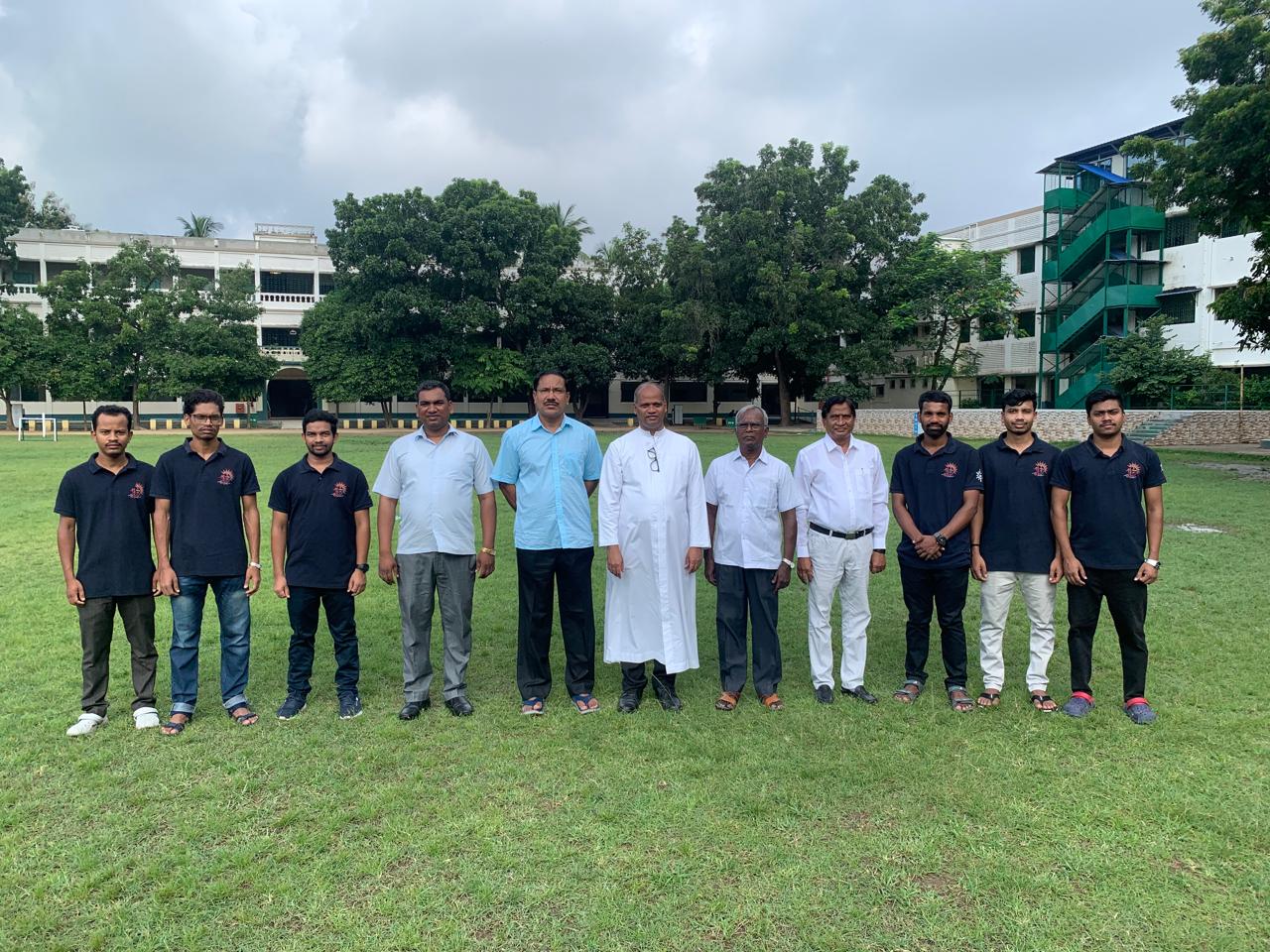
The Society of Jesus is a religious order within the Catholic Church founded by Saint Ignatius of Loyola and nine companions in 1540. Today, there are about 16,000 Jesuits working in 112 countries across six continents. Jesuit priests and brothers live in communities and engage in a wide variety of work, including service in schools and universities, spirituality centres, parishes, missions, the media and creative arts, as well as in prison, hospital and military chaplaincy, and working with refugees.
Their involvement in education began in 1548, when a small group of Jesuits was sent to Sicily at the request of the town council of Messina to start a school. Soon other towns and cities followed, and over the next two centuries a network of nearly 850 Jesuit schools and universities was established throughout the world. Today, most Jesuit educational institutions are staffed largely by people who are not themselves Jesuits but whose work continues and builds upon this 450-year-old tradition of Jesuit education.
Jesuits, are those who work with us, follow a spirituality that springs from the Spiritual Exercises, the little book begun by Saint Ignatius in 1521. Ignatian spirituality is rooted in the Gospel and in the desire to give greater glory to God by following Jesus Christ and serving others as He did. It calls us to be attentive to our lived experience, to discern what is truly good for us and what is not, and to act accordingly. It also fosters the fundamental attitudes of gratitude and generosity.

What makes a Jesuit school distinctive? Saint Ignatius of Loyola, the 16th-century founder of the Society of Jesus, taught that a Jesuit school should foster growth in both living and learning for the greater glory of God and the common good. At the heart of Jesuit education lies the principle of cura personalis—care for the whole person—so that each student may flourish academically, emotionally, socially, and spiritually.
Jesuit schools strive to provide excellent intellectual formation through outstanding teaching and a Magis curriculum that is as broad and as deep as the school’s resources allow. This is complemented by a rich range of co-curricular and extracurricular activities so that every child’s interests, gifts, and talents are nurtured. The Latin word Magis, meaning “more” expresses the ideals of generosity, magnanimity, and selflessness. It echoes the Jesuit motto, Ad Majorem Dei Gloriam—“For the greater glory of God”. Saint Ignatius often challenged people with the questions: “What have I done for God? What am I doing for God? What more can I do for God?” In the same spirit, students are encouraged to ask themselves how they can strive for excellence and use their abilities in the service of God, humanity, and the world.
Underlying all teaching and learning in a Jesuit school is strong pastoral care. Teachers and support staff know their students well and accompany them with challenge, encouragement, and support through the ups and downs of growing up. Through links with Jesuit institutions across the globe, students are helped to develop a broad and outward-looking vision, learning to understand diverse cultures and life situations both near at home and across the world.
Jesuit schools aim not only at academic excellence but also at the formation of character. They seek to form well-educated men and women who will lead virtuous lives and become “men and women for others,” using their God-given gifts to build a more just and compassionate world, especially in service of the poor and the marginalized. This twofold emphasis on living and learning may be called the very DNA of Jesuit education. Its vision looks forward with faith and hope to the transformation of the world for the greater glory of God and the common good.
Worldwide, the Society of Jesus is responsible for 1,865 educational institutions in 65 countries, including 356 secondary schools. These institutions engage more than 98,000 teachers—over 91,000 of them lay people—men and women belonging to different religious communities and the rest, members of the Society of Jesus. They educate approximately 17,92,000 students. In India, Nepal, and Sri Lanka, the Jesuits administer 153 high schools, 38 university colleges, 14 technical institutes, and five other institutions, with 8,085 lay teachers educating 234,338 students from every social class, community, and linguistic group through English and various regional languages. All these institutions form part of the Catholic Church’s mission to contribute to share in the country’s educational undertaking.